How to Build a Construction Logistics Plan That the Field Will Actually Follow

A construction logistics plan describes how people, materials, and equipment will move on and around a site over the life of a project. Done well, it prevents idle crews, delivery pileups, and avoidable safety incidents. Done poorly, it is a document written for the bid and filed away. The difference comes down to whether the people running the site helped write it and whether it gets updated as conditions change. The plan is also a communication tool. Subcontractors, owners, and neighbors all rely on it to understand what will happen next to them, which is why clarity matters as much as completeness.
Start With Site Constraints
Every plan begins with what the site will not allow. Property lines, adjacent buildings, utilities, public streets, overhead lines, and existing grades all limit where equipment can sit and trucks can turn. Mapping those constraints first keeps the plan honest. It also reveals which phases will be tightest, so planning effort goes where the risk is highest.
Define Access and Traffic Flow
Plan how vehicles enter, circulate, and leave. That includes gate locations, queuing space so trucks do not back onto public roads, one-way loops where room allows, and separation between vehicles and pedestrians. On urban and occupied sites, coordinate with neighbors and local authorities early. Traffic control permits and lane restrictions have lead times that can shape the schedule. Document the hours when deliveries are allowed, the maximum truck size the site can handle, and the route trucks should follow to avoid sensitive streets. Share these rules with every supplier before the first delivery arrives.
Plan Staging and Laydown by Phase
Laydown areas rarely stay in one place for an entire project. Early work may use open ground that later becomes the building footprint. Plan where materials sit in each phase, how much can be stored, and what has to arrive just in time. Aligning deliveries to the schedule reduces double handling, which is one of the quieter sources of lost labor hours. A short delivery request process, ideally a single form or scheduling tool, keeps trades from competing for the same dock or gate at the same hour.
Sequence Lifting and Equipment
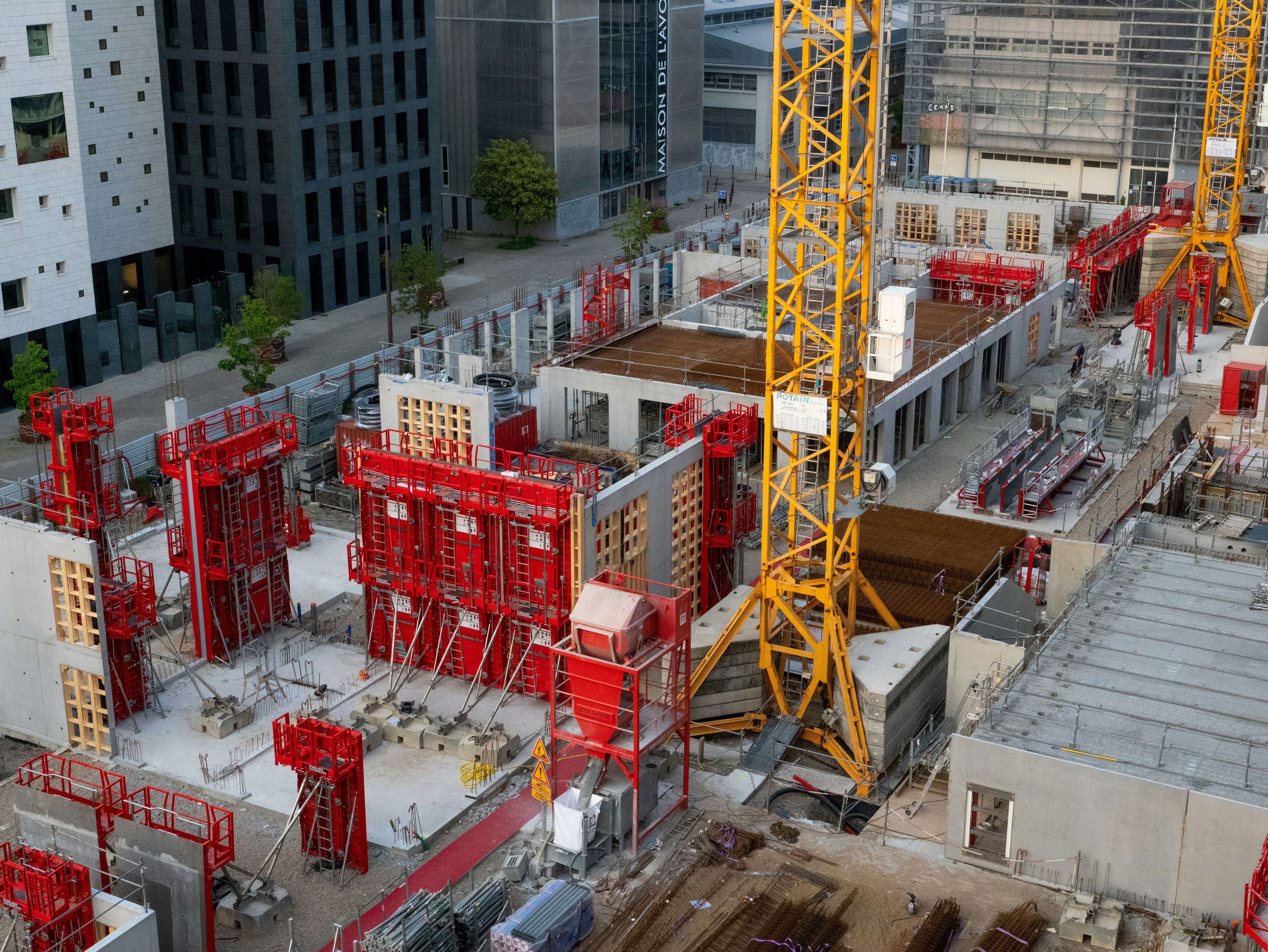
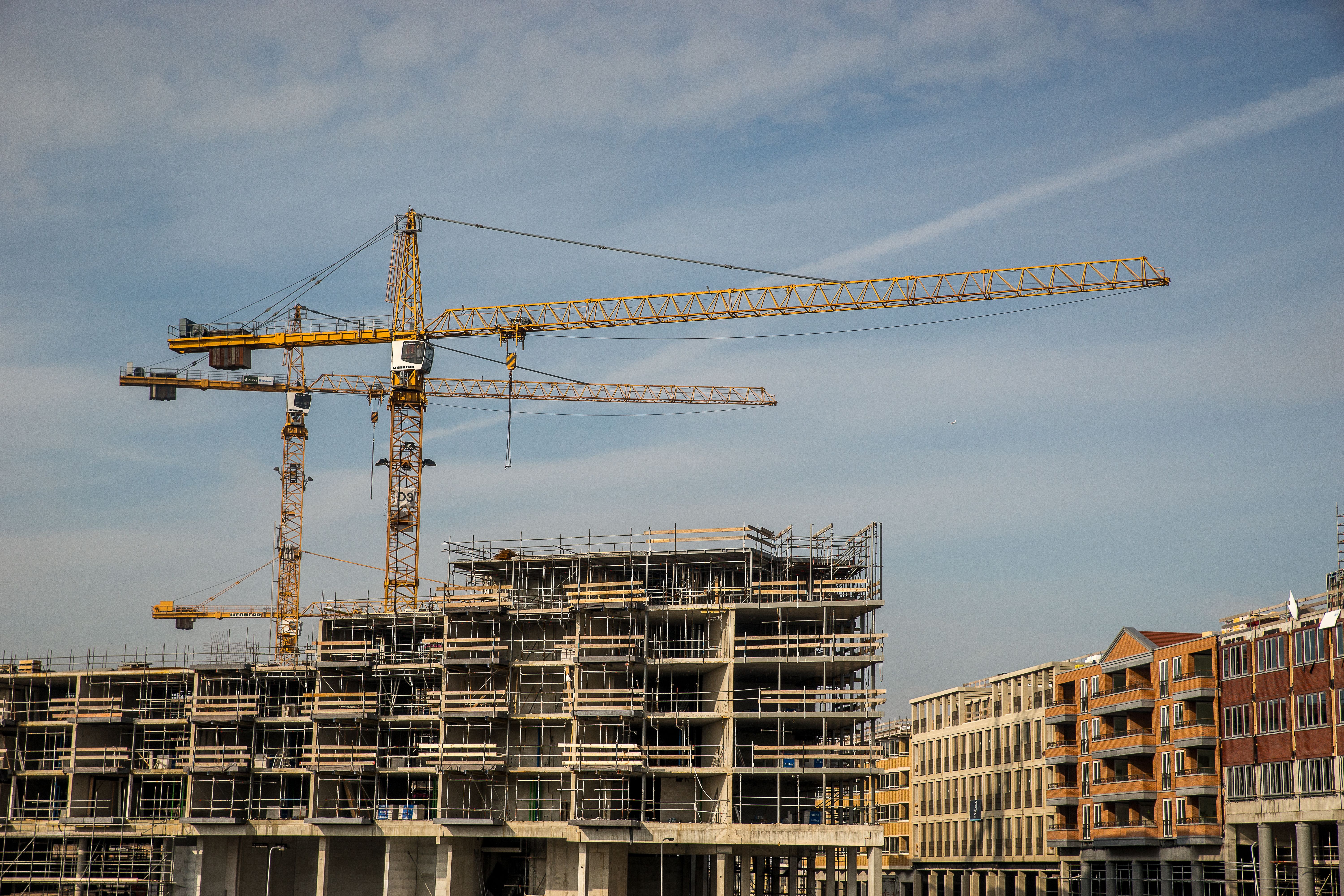
Cranes, hoists, and large equipment set the rhythm of a build. Plan their locations, swing radii, pick sequences, and assembly and removal windows. Check that the crane location does not trap other work or block egress. Coordinate with the structural sequence so the lifting plan supports it instead of competing with it.
Build In Safety and Communication
Define exclusion zones, pedestrian protection, emergency access, and fire department routes. Establish how deliveries are scheduled, how subcontractors request space, and who has authority to resolve conflicts. A plan that names a person responsible for each topic gets followed. One that assigns responsibility to everyone gets ignored.
Keep It Alive
The plan should change when the site changes. Review it at regular intervals, update it when phases shift, and share each revision with every trade. Short visual updates work better than long documents. Many teams use phased drawings or schedule-linked 3D animation so each trade can see their access and constraints at a glance.
The Bottom Line
A good logistics plan is specific, built with the field team, organized by phase, and updated often. It turns site constraints into a workable sequence and gives every trade a shared picture of how the project will run. The time spent building it is repaid in fewer conflicts and a safer site. Start the next plan by reviewing the last one with the field team. Ask which parts they used, which they ignored, and what was missing. Those answers show where to put effort, and they build the habit of treating the plan as a working tool rather than a submission requirement.